
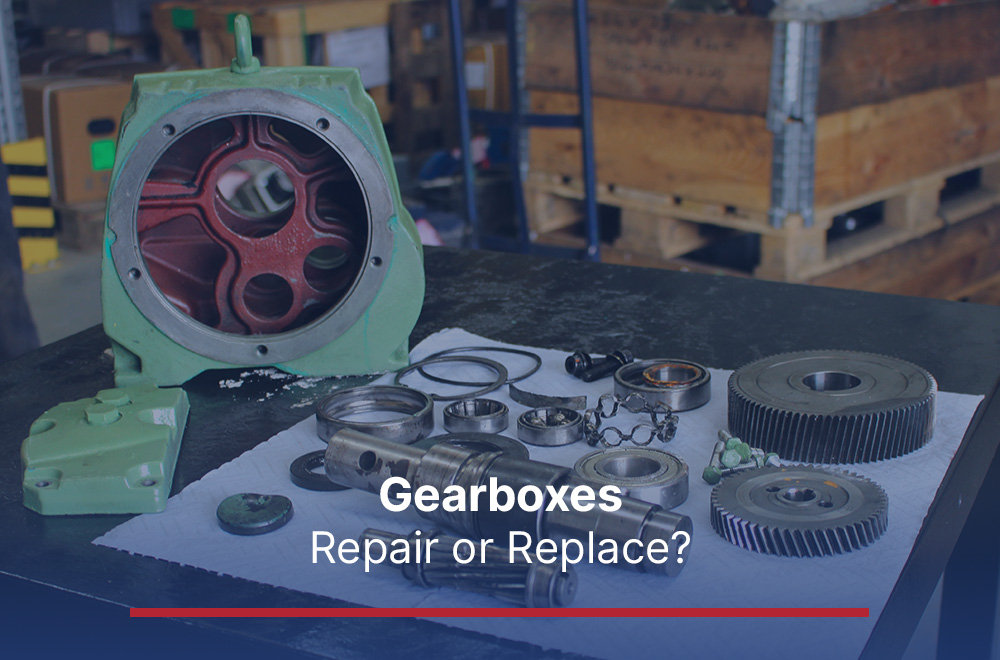
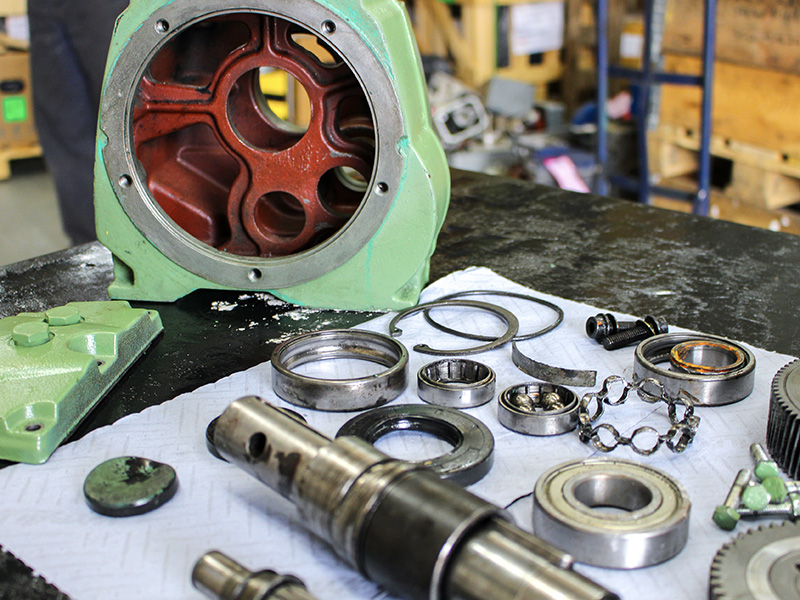
When an industrial gearbox starts making noise, running hot, or leaking oil, the question that follows is always the same: is it worth repairing, or is it time to replace it? Get the call wrong in either direction and it costs you. A premature replacement wastes a unit with years of service left in it, while pushing a failing gearbox too far can turn a straightforward repair into a wrecked set of gears and an unplanned shutdown.
This guide walks through how gearboxes fail, the warning signs to watch for, and the factors that should drive the repair-or-replace decision. If you want a refresher on how gearboxes actually work before diving in, our guide to understanding gearboxes covers the fundamentals.
Gearboxes are built to run for years with minimal attention, but they operate under constant load in environments that are rarely kind to them. Understanding why a unit has failed is the essential first step in deciding what to do about it.
Lubrication problems sit behind a large share of gearbox failures. Oil that is degraded, contaminated, at the wrong level, or simply the wrong grade allows metal-to-metal contact between gear teeth and within bearings. Once that starts, wear accelerates quickly, and the debris it generates circulates through the oil and damages everything else.
Bearing wear is another leading cause. Bearings support every shaft in the gearbox, and when they deteriorate, they introduce play, vibration, and misalignment that transfers stress onto the gears themselves. A worn bearing caught early is a routine replacement. A worn bearing left to collapse can take the gear set with it.
Other common failure modes include seal failure leading to oil loss and contamination ingress, overloading beyond the unit's rated capacity, shock loads from the driven machinery, misalignment between the gearbox and the motor or driven equipment, and straightforward gear tooth wear or damage from years of service.
The important point is that most of these failure modes are repairable, provided they are caught before secondary damage sets in. The decision between repair and replacement comes down to the extent of the damage, the condition of the wider unit, and the economics of the specific gearbox involved.
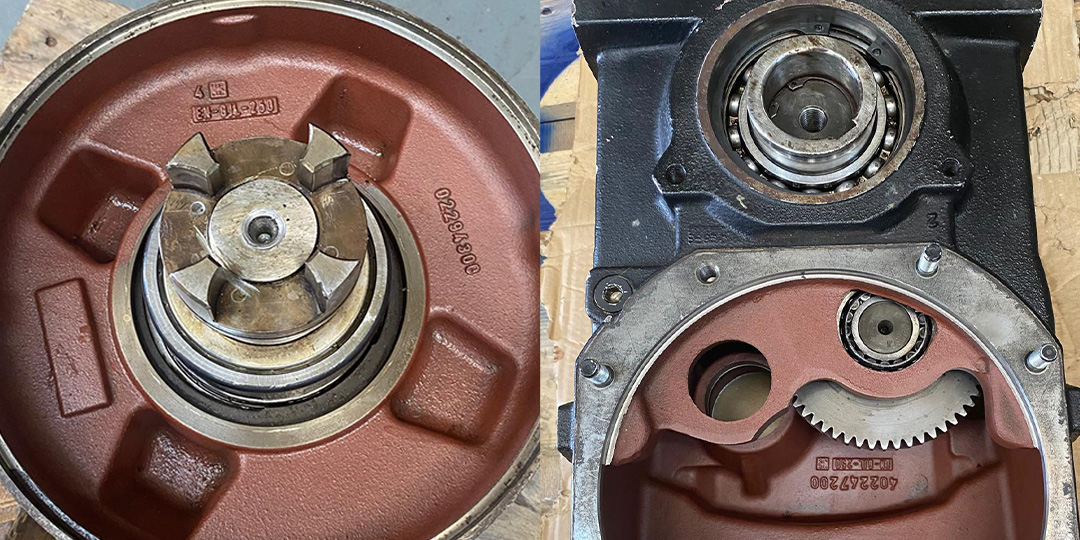
Gearboxes rarely fail without warning. Recognising the early indicators gives you the chance to intervene while the problem is still a manageable repair.
None of these symptoms on its own means the gearbox needs replacing, but all of them warrant inspection. Catching a problem at the noisy-bearing stage rather than the broken-tooth stage is the difference between a routine repair and a major rebuild.
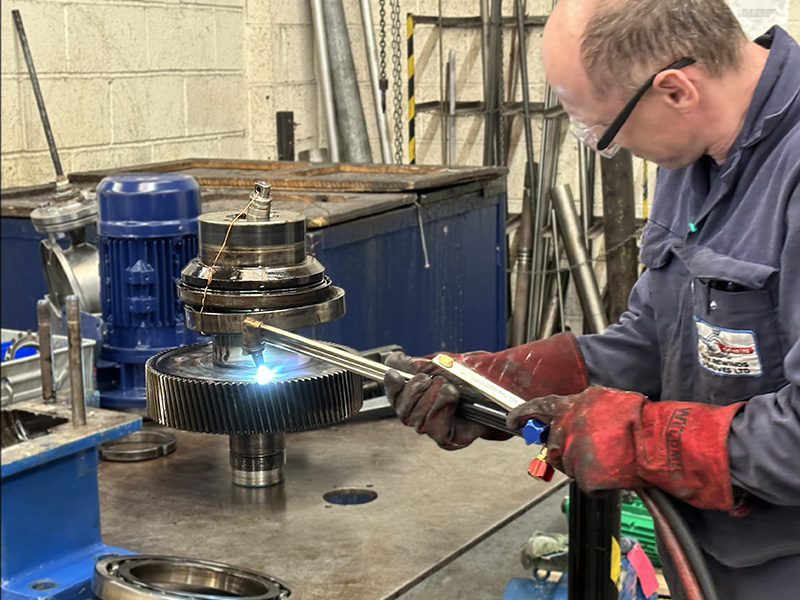
A professional gearbox repair is a structured process, not a case of topping up the oil and hoping. At City Rewinds and Drives, our repair process follows these key stages:
Because we strip and inspect the whole unit rather than just the failed component, underlying causes get addressed, not just the symptoms. There is little value in fitting new bearings to a gearbox that is failing because of a misalignment problem that never gets corrected.
For a large proportion of gearbox failures, repair is not just viable but the smarter option. The following circumstances typically point towards repair:
There are situations where replacement is the right answer, and a reputable repair specialist will tell you so honestly after inspection. Key indicators include:
Use the table below as a quick-reference framework. No single factor decides the answer on its own; a professional inspection should always inform the final decision.
At City Rewinds and Drives, we work with both sides of this decision, and our starting point is always an honest assessment of what is actually best for your operation.
Our gearbox repair service covers strip-down, inspection, bearing and seal replacement, gear assessment, shaft repair, and reassembly to manufacturer tolerances, across all major makes. Every repaired unit is tested before it leaves our workshop, and we can assist with reinstallation on site where needed.
When repair is not the right solution, we can source and supply replacement gearboxes and geared motor units from leading manufacturers including SEW Eurodrive and Bonfiglioli, selected for compatibility with your system and application. Our engineers advise on the best fit, whether a direct replacement or an upgraded specification, and we move quickly to minimise disruption.
Based in Leicester, just off the M1, we are well placed to serve customers across the Midlands and nationwide. For urgent requirements, our 24-hour emergency line is available around the clock.
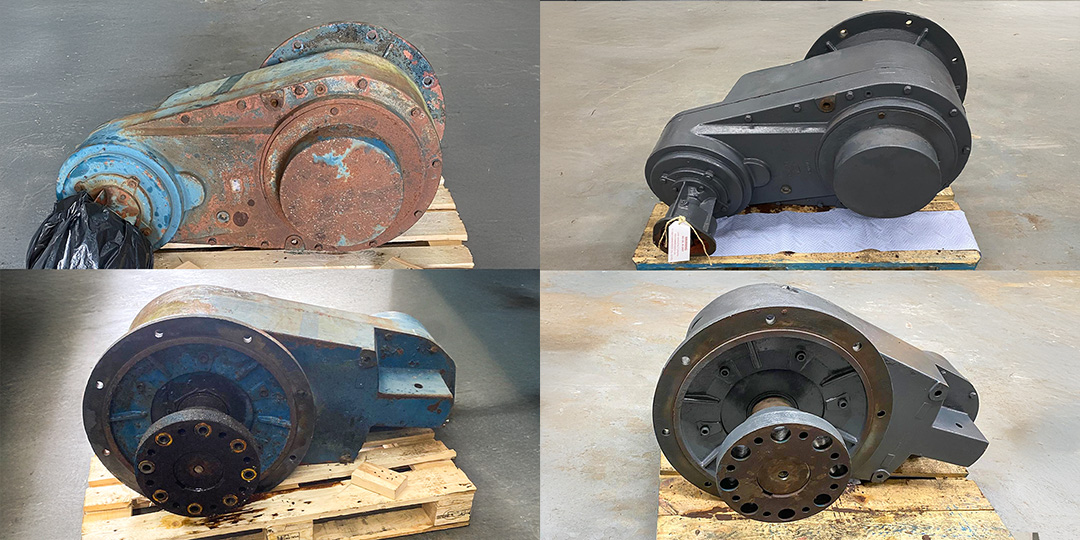
The repair-or-replace decision for a gearbox is not a guessing game: it is an engineering assessment. Most gearbox failures, from bearing and seal wear to lubrication damage and shaft problems, are repairable by skilled technicians with the right equipment. Repair typically delivers faster turnaround, lower cost, and less material waste than replacement, and in the right circumstances extends asset life by many years. But when structural damage, obsolescence, or end-of-life deterioration is the diagnosis, a well-specified replacement is the right call.
The most important step is getting a professional inspection before making the decision. At City Rewinds and Drives, that is exactly where we start: with an honest assessment, a transparent report, and the expertise to carry out whichever route is right for you.